Table of Contents
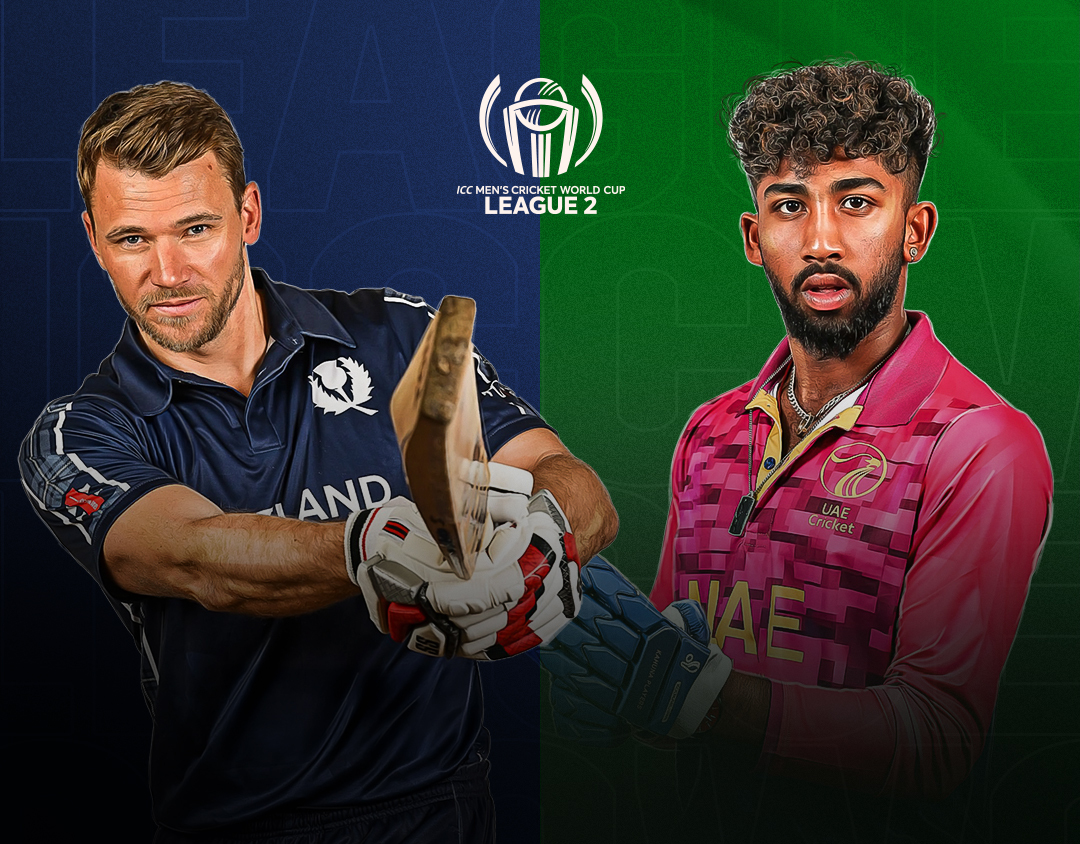
Cricket matches between the United Arab Emirates and Scotland often carry greater significance than their Associate status might suggest. Both teams are regular contenders in ICC qualification pathways and have developed a competitive rivalry over recent years. Their ICC Cricket World Cup League 2 encounter on 14 May 2025 in Utrecht provided another important chapter in that story. Scotland delivered a commanding performance, restricting UAE to a modest total before completing a comfortable chase with eight wickets in hand. The contest highlighted Scotland’s bowling discipline, batting maturity, and tactical superiority while exposing areas where UAE struggled to maintain momentum throughout the match.
Match Overview
| Match | United Arab Emirates vs Scotland |
|---|---|
| Tournament | ICC Cricket World Cup League 2 |
| Date | 14 May 2025 |
| Venue | SV Kampong Cricket Ground, Utrecht |
| Result | Scotland won by 8 wickets |
| UAE Score | 161 all out (47.5 overs) |
| Scotland Score | 162/2 (24.2 overs) |
| Margin | Scotland won with 154 balls remaining |
This match was one of the most one-sided encounters between the two sides in recent years. UAE struggled to establish a competitive platform after choosing to bat, while Scotland executed their plans with impressive efficiency. The final margin of victory reflected Scotland’s complete control over the contest rather than a late surge.
The result also carried valuable League 2 points, strengthening Scotland’s position in the standings and reinforcing their reputation as one of the strongest Associate nations in world cricket.
Toss and Team Decisions
| Toss Detail | Outcome |
|---|---|
| Toss Winner | United Arab Emirates |
| Decision | Bat First |
| Match Result | Decision unsuccessful |
| Winning Team | Scotland |
At the toss, UAE elected to bat first, believing the surface would become more difficult later in the day.
Initially, the decision appeared reasonable because the pitch offered decent batting conditions. However, Scotland’s seamers extracted enough movement to trouble UAE’s top order. The Scottish bowlers consistently hit disciplined lines, forcing mistakes and ensuring the run rate remained under control.
As the innings progressed, UAE never managed to capitalize on batting first. Scotland ultimately demonstrated that conditions were suitable for batting throughout the day, making the toss advantage largely irrelevant.
UAE First Innings Analysis
UAE’s innings was defined by interrupted momentum. Every time a batter appeared capable of building a substantial score, Scotland found a breakthrough.
UAE Batting Scorecard
| Batter | Runs | Balls |
|---|---|---|
| Aryansh Sharma | 11 | 22 |
| Muhammad Waseem | 61 | 75 |
| Asif Khan | 17 | 36 |
| Other Batters | Small Contributions | Various |
| Extras | Valuable Support | – |
| Total | 161 All Out | 47.5 Overs |
Muhammad Waseem emerged as the lone bright spot for UAE with a composed 61. His innings displayed patience and determination, but he lacked sustained support from the opposite end.
Aryansh Sharma and Asif Khan showed glimpses of promise, yet neither managed to convert their starts into match-defining contributions. Frequent wickets prevented partnerships from developing, leaving UAE well short of what appeared a par score.
The innings demonstrated the importance of middle-order stability in ODI cricket. Without one additional fifty or a substantial partnership, UAE’s total remained vulnerable.
Scotland Bowling Scorecard
| Bowler | Overs | Runs | Wickets |
|---|---|---|---|
| Brad Currie | 9.5 | 34 | 3 |
| Brandon McMullen | 10 | 48 | 3 |
| Other Bowlers | Controlled Support | Shared Effort |
Brad Currie and Brandon McMullen spearheaded Scotland’s bowling attack. Together they claimed six wickets and ensured UAE never gained control of the innings.
Currie’s new-ball spell created early pressure, while McMullen’s ability to strike in middle overs prevented recovery efforts. Their combined performance showcased the depth and balance of Scotland’s bowling resources.
The economy rates were equally significant. Rather than chasing wickets through excessive aggression, Scotland maintained disciplined lines and forced UAE’s batters into errors.
Scotland Chase Analysis
A target of 162 required professionalism rather than heroics, and Scotland delivered exactly that.
Their batters immediately placed pressure back on the UAE bowlers by rotating strike efficiently and punishing loose deliveries. Unlike UAE’s innings, Scotland’s chase featured partnerships that steadily reduced the required rate.
There were no periods of panic or uncertainty. The chase was controlled from beginning to end.
Scotland Batting Scorecard
| Batter | Runs | Balls |
|---|---|---|
| George Munsey | 56 | 45 |
| Brandon McMullen | 50 | 51 |
| Supporting Batters | Valuable Contributions | Various |
| Total | 162/2 | 24.2 Overs |
George Munsey produced a fluent 56 from 45 deliveries, setting the tone for the chase. Brandon McMullen followed with an equally important fifty, ensuring Scotland remained comfortably ahead of the required rate.
The pair combined composure with aggression, eliminating any possibility of a UAE comeback. Their innings illustrated why Scotland have become such a consistent force in Associate cricket.
UAE Bowling Scorecard
| Bowler | Overs | Runs | Wickets |
|---|---|---|---|
| Simranjeet Singh | 7 | 46 | 1 |
| Muhammad Jawadullah | 4 | 40 | 1 |
| Others | Shared Overs | No Major Impact |
The UAE bowling attack struggled to create sustained pressure.
Although they claimed two wickets, Scotland’s batters rarely looked troubled. The bowlers found it difficult to defend a below-par target, and Scotland’s positive intent quickly shifted momentum away from UAE.
Defending 161 required early breakthroughs and relentless accuracy. Unfortunately for UAE, neither materialized often enough.
Top Performers
| Player | Team | Performance |
|---|---|---|
| George Munsey | Scotland | 56 runs |
| Brandon McMullen | Scotland | 50 runs and 3 wickets |
| Brad Currie | Scotland | 3 wickets |
| Muhammad Waseem | UAE | 61 runs |
This table captures the key figures who influenced the outcome.
McMullen deserves particular recognition because he contributed significantly with both bat and ball. His all-round display exemplified the versatility that modern ODI cricket demands.
Munsey’s aggressive half-century ensured the chase never became complicated, while Waseem’s determined effort prevented UAE from suffering an even lower total.
Key Statistics From the Match
| Statistic | UAE | Scotland |
|---|---|---|
| Runs Scored | 161 | 162 |
| Wickets Lost | 10 | 2 |
| Overs Faced | 47.5 | 24.2 |
| Top Score | 61 | 56 |
| Best Bowling | – | 3 wickets |
These numbers explain the story better than any narrative alone.
Scotland lost only two wickets while chasing, underlining the control they maintained throughout the innings. The contrast between UAE losing all ten wickets and Scotland losing just two highlights the gulf in execution between the sides.
The chase completed in less than half the allotted overs further emphasizes Scotland’s dominance.
How The Match Was Won
Scotland secured victory through a combination of disciplined bowling and calculated batting.
First, their bowlers prevented UAE from building partnerships. Rather than chasing wickets recklessly, they maintained pressure through accuracy and consistency.
Second, they identified Muhammad Waseem as the key wicket and ensured no other batter could provide significant support.
Third, Scotland’s chase was remarkably efficient. Munsey attacked scoring opportunities early, forcing UAE onto the defensive. McMullen then consolidated the advantage with mature shot selection and smart strike rotation.
Finally, Scotland avoided the mistakes that plagued UAE. Their fielding was sharp, bowling plans were clear, and batting partnerships were substantial.
The victory was therefore the result of sustained superiority across all three disciplines.
Key Moments That Changed The Game
1. Early UAE Wickets
Scotland’s new-ball bowlers immediately established pressure, preventing UAE from making a strong start.
2. Muhammad Waseem’s Isolation
Although Waseem scored 61, the lack of support around him restricted UAE’s scoring potential and prevented a competitive total.
3. Brad Currie’s Breakthrough Spell
His three wickets disrupted UAE’s middle order and significantly reduced the possibility of a late surge.
4. Brandon McMullen’s All-Round Influence
McMullen contributed with the ball before returning to score a match-winning fifty.
5. George Munsey’s Aggressive Start
Munsey ensured Scotland never felt scoreboard pressure during the chase.
6. Scotland’s Dominant Partnership
The key partnership during the chase effectively ended UAE’s hopes of defending the target.
Final Result and Significance
Scotland won by eight wickets with an extraordinary 154 balls remaining. The margin highlighted not only their superiority on the day but also their growing consistency in ICC competition.
For Scotland, the victory strengthened their League 2 campaign and boosted confidence ahead of future qualification challenges. For UAE, the defeat emphasized the importance of building partnerships and finding greater middle-order stability.
The match ultimately reinforced why Scotland continue to be considered among the strongest Associate nations in world cricket.
FAQs
Who won the United Arab Emirates vs Scotland match?
Scotland won the match by eight wickets in a dominant performance. After restricting UAE to 161 all out in 47.5 overs, Scotland chased the target comfortably, reaching 162/2 in only 24.2 overs. The large victory margin reflected Scotland’s superiority with both bat and ball. Their bowlers controlled the first innings while the batters ensured there was no opportunity for UAE to apply pressure during the chase. The result also provided important points in the ICC Cricket World Cup League 2 competition.
Who was the highest scorer in the match?
Muhammad Waseem was the highest scorer in the match with 61 runs for the United Arab Emirates. He played a patient innings under difficult circumstances as wickets continued to fall around him. Although his contribution helped UAE reach 161, the lack of substantial support from other batters prevented the team from posting a stronger total. Waseem’s knock was one of the few positive aspects of the UAE innings and demonstrated his importance within the batting lineup.
Which Scottish bowler had the biggest impact?
Both Brad Currie and Brandon McMullen played crucial roles with the ball, claiming three wickets each. Currie provided early breakthroughs and maintained pressure throughout his spell, while McMullen struck at important stages to prevent UAE from recovering. Their combined six wickets formed the foundation of Scotland’s victory. By consistently removing key batters, they ensured that UAE never developed the partnerships required to post a competitive ODI score.
How important was Brandon McMullen’s all-round performance?
McMullen’s contribution was arguably the defining individual performance of the match. He claimed three wickets during UAE’s innings and later scored a composed half-century during the chase. Such all-round displays are particularly valuable in ODI cricket because they influence multiple phases of the game. His bowling reduced UAE’s scoring potential, while his batting eliminated any possibility of a collapse during Scotland’s pursuit of the target. His impact extended far beyond traditional statistics.
Why was Scotland’s chase so successful?
Scotland approached the chase with clarity and confidence. George Munsey provided an aggressive start, putting immediate pressure on UAE’s bowlers. Brandon McMullen then ensured stability through the middle overs. The Scottish batters rotated strike effectively and capitalized on loose deliveries. Because the target was modest, they avoided unnecessary risks and focused on maintaining momentum. Their ability to build partnerships and keep the required rate comfortably under control made the chase appear effortless.
What does this result mean for both teams?
For Scotland, the victory strengthened their position in ICC Cricket World Cup League 2 and reinforced their credentials as one of the strongest Associate nations. The comprehensive nature of the win also improved confidence and net run-rate considerations. For UAE, the defeat highlighted areas requiring improvement, particularly middle-order batting and partnership building. While individual performances showed promise, the team needed greater collective consistency to compete successfully against top Associate opposition in major qualification tournaments.