Table of Contents
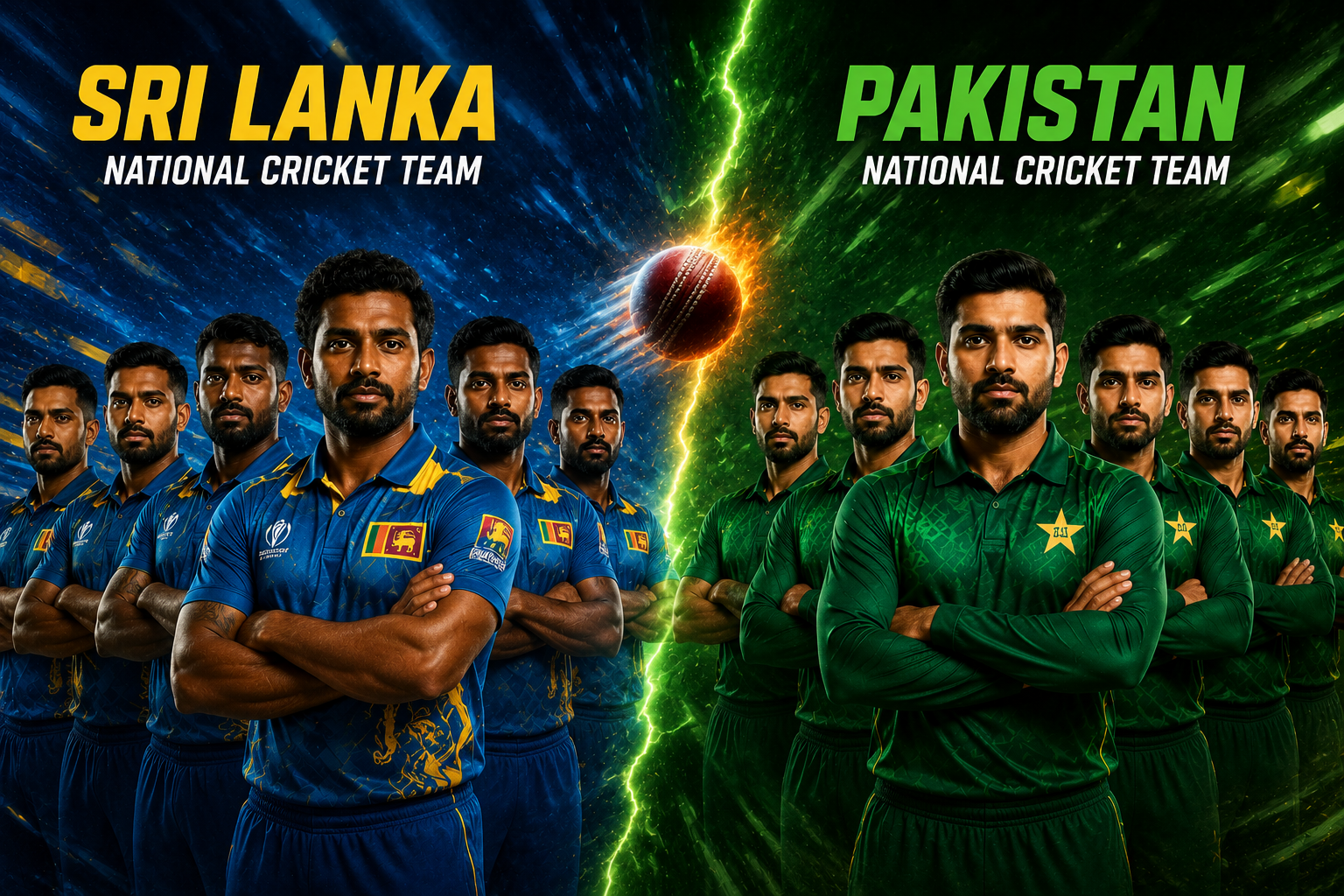
The cricket rivalry between Sri Lanka and Pakistan has produced some of the most memorable moments in Asian cricket history. Over the years, both teams have competed across Tests, One Day Internationals, T20 Internationals, World Cups, and major continental tournaments. Their encounters have featured legendary batters, world-class bowlers, thrilling finishes, and unforgettable performances under pressure. While Pakistan often entered contests with a rich cricketing legacy, Sri Lanka gradually developed into a formidable force capable of challenging any opponent. This rivalry is built on respect, competitiveness, and a shared passion for cricket, making every meeting an exciting chapter in the sport’s history.
Recent Matches Table
| Match ID | Tournament Series | Match Venue | Format | First Innings Score | Second Innings Score | Match Winner |
| M-01 | World Cup 2026 | Pallekele | T20I | PAK 212/8 (20) | SL 207/6 (20) | Pakistan |
| M-02 | ICC Bilateral 2026 | Dambulla | T20I | SL 160/6 (12) | PAK 146/8 (12) | Sri Lanka |
| M-03 | ICC Bilateral 2026 | Dambulla | T20I | SL 128 (19.2) | PAK 129/4 (16.4) | Pakistan |
| M-04 | Tri-Nation Series | Rawalpindi | T20I | SL 114 (19.1) | PAK 118/4 (18.4) | Pakistan |
| M-05 | Tri-Nation Series | Rawalpindi | T20I | SL 184/5 (20) | PAK 178/7 (20) | Sri Lanka |
| M-06 | Tri-Nation Series | Rawalpindi | T20I | SL 128/7 (20) | PAK 131/3 (15.3) | Pakistan |
Match Overview Table
| Match ID | Toss Winner | Chosen Path | Pitch Condition | Ball Type | Boundary Count | Attendance |
| M-01 | Sri Lanka | Bowl First | Flat Track | Kookaburra | 41 Fours / 22 Sixes | 32,500 Full |
| M-02 | Pakistan | Bowl First | Slow / Damp | Kookaburra | 21 Fours / 11 Sixes | 18,200 High |
| M-03 | Pakistan | Bowl First | Dry / Turning | Kookaburra | 19 Fours / 5 Sixes | 22,000 High |
| M-04 | Pakistan | Bowl First | Grass Tinge | Kookaburra | 14 Fours / 6 Sixes | 15,400 Mid |
| M-05 | Pakistan | Bowl First | Flat / Hard | Kookaburra | 33 Fours / 14 Sixes | 17,800 Mid |
| M-06 | Sri Lanka | Bat First | Slow Low | Kookaburra | 15 Fours / 4 Sixes | 14,200 Low |
Best Bowling Figures Table
| Bowler Name | Team Squad | Overs Bowled | Maidens | Runs Allowed | Wickets Taken | Economy Rate |
| Abrar Ahmed | Pakistan | 4.0 | 0 | 23 | 3 | 5.75 |
| Dilshan Madushanka | Sri Lanka | 4.0 | 0 | 33 | 3 | 8.25 |
| Dasun Shanaka | Sri Lanka | 4.0 | 0 | 42 | 2 | 10.50 |
| Shaheen Afridi | Pakistan | 4.0 | 0 | 48 | 1 | 12.00 |
| Naseem Shah | Pakistan | 4.0 | 0 | 36 | 1 | 9.00 |
| Dushmantha Chameera | Sri Lanka | 4.0 | 0 | 48 | 1 | 12.00 |
Statistical Comparison Table
| Game Format | Total Played | Pakistan Wins | Sri Lanka Wins | Draws/No Result | Highest Innings | Lowest Innings |
| Test Matches | 57 | 23 | 17 | 17 | 746/7 (PAK) | 102 (SL) |
| ODI Matches | 157 | 93 | 59 | 5 | 371/9 (PAK) | 75 (PAK) |
| T20I Matches | 30 | 18 | 12 | 0 | 212/8 (PAK) | 114 (SL) |
| Asia Cup | 18 | 11 | 7 | 0 | 330/4 (PAK) | 133/8 (SL) |
| World Cup | 9 | 8 | 0 | 1 | 345/4 (PAK) | 211 (SL) |
| Overall Sum | 271 | 153 | 95 | 23 | 746/7 (PAK) | 75 (PAK) |
Match Result and Player of the Match Table
| Match ID | Winner Team | Win Margin | Top Batter (Runs) | Top Bowler (Wkts) | Player of Match | Impact Skill |
| M-01 | Pakistan | 5 runs | S. Farhan (100) | A. Ahmed (3/23) | Sahibzada Farhan | Powerplay Hitting |
| M-02 | Sri Lanka | 14 runs | C. Asalanka (44) | W. Hasaranga (2/18) | Wanindu Hasaranga | Middle-Overs Spin |
| M-03 | Pakistan | 6 wickets | B. Azam (48) | S. Khan (3/22) | Shadab Khan | All-Round Return |
| M-04 | Pakistan | 6 wickets | M. Rizwan (38) | M. Nawaz (2/14) | Mohammad Nawaz | Tight Economy |
| M-05 | Sri Lanka | 6 runs | P. Nissanka (64) | D. Chameera (3/26) | Dushmantha Chameera | Death Over Pace |
| M-06 | Pakistan | 7 wickets | F. Zaman (52) | M. Nawaz (3/18) | Mohammad Nawaz | Powerplay Spin |
When Two Asian Cricket Forces First Crossed Paths
The rivalry began when two neighboring cricket nations started meeting regularly in international competitions. One side had already established itself as a strong force in world cricket, while the other was building its reputation through determination and steady improvement. Early matches were often one-sided, but they laid the foundation for a competitive relationship that would grow over the decades. Players from both teams learned valuable lessons from these encounters, and fans quickly became invested in the outcomes. These initial contests introduced contrasting playing styles, tactical approaches, and cricketing philosophies. As the teams faced each other more frequently, mutual respect developed alongside a desire to gain supremacy. The first phase of the rivalry may not have featured dramatic finishes, but it created the framework for future classics. Every series added new stories, memorable performances, and moments that strengthened the competitive bond between the two nations, setting the stage for a rivalry that would become one of the most recognized contests in Asian cricket.
| Early Era | Stronger Side | Emerging Side | Match Style |
| First Meetings | Experienced Squad | Developing Squad | Learning Phase |
| Bilateral Series | Tactical Cricket | Growth Period | Competitive Games |
| Home Matches | Familiar Conditions | Adaptation Needed | Balanced Results |
| Away Matches | Strong Challenge | Valuable Experience | Tough Contests |
| Foundation Years | Rising Interest | Growing Confidence | Rivalry Begins |
Pakistan’s Established Stars Meet Sri Lanka’s Rising Generation
As international cricket evolved, established players faced a new generation eager to prove itself. Experienced batters and bowlers dominated several encounters, but young talent gradually began changing the balance. Competitive series produced memorable individual displays and important victories that boosted confidence. Rising stars showed they could compete with some of the biggest names in the game. Fans witnessed a fascinating blend of experience and youthful energy, making every match increasingly significant. This period helped transform a developing rivalry into a respected contest between two ambitious cricket nations.
| Experience | Youth Talent | Key Strength | Impact |
| Senior Players | Emerging Stars | Batting Depth | Competitive Matches |
| Proven Leaders | New Captains | Team Building | Better Results |
| Fast Bowlers | Young Batters | Aggressive Cricket | Fan Interest |
| Tactical Plans | Fresh Ideas | Adaptability | Balanced Series |
| Consistency | Development | Strong Foundations | Rivalry Growth |
The Rivalry Finds Its Identity During the 1990s
The 1990s became a defining decade as matches grew more competitive and emotionally charged. Teams entered contests with greater confidence, and victories carried significant importance. Leadership, strategy, and consistency became major factors in determining outcomes. Several players delivered career-defining performances, while dramatic encounters attracted widespread attention. Cricket supporters eagerly followed every series, knowing that momentum could shift at any moment. The rivalry developed a distinct identity based on resilience, tactical battles, and the ability to perform under pressure.
| Decade | Key Feature | Team Focus | Result |
| Early 1990s | Competitive Growth | Consistency | Closer Matches |
| Mid 1990s | Leadership Impact | Strategy | Major Wins |
| Tournament Play | High Pressure | Adaptation | Memorable Moments |
| Bilateral Series | Rivalry Expansion | Team Balance | Strong Competition |
| Late 1990s | Established Contest | Confidence | Lasting Legacy |
World Cup Nights That Raised the Stakes
Global tournaments elevated the rivalry to another level. Matches on the world stage carried enormous pressure because every result could influence tournament progress. Players were expected to perform under intense scrutiny, and supporters viewed these encounters as more than ordinary games. Outstanding batting displays, disciplined bowling spells, and decisive partnerships often determined success. The atmosphere surrounding these contests created unforgettable memories and increased the rivalry’s significance within international cricket.
| Tournament Stage | Pressure Level | Key Factor | Outcome |
| Group Matches | High | Momentum | Important Wins |
| Knockout Games | Extreme | Composure | Historic Results |
| Big Partnerships | Crucial | Stability | Match Control |
| Bowling Performances | Vital | Discipline | Breakthroughs |
| Fan Support | Massive | Energy | Memorable Atmosphere |
Battle of the Batting Masters
Some of the rivalry’s greatest moments came from elite batters producing remarkable innings. Elegant stroke play, patient accumulation, and powerful finishing became common themes. Experienced players frequently guided their teams through difficult situations, while younger stars announced their arrival with fearless performances. Batting excellence often shaped match results and created unforgettable highlights. These contests showcased technical skill, mental strength, and the ability to thrive under pressure.
| Batting Element | Importance | Influence | Result |
| Top Order | Stability | Strong Starts | Better Totals |
| Middle Order | Recovery | Momentum Shift | Competitive Scores |
| Partnerships | Teamwork | Pressure Relief | Match Control |
| Centuries | Match Impact | Confidence Boost | Winning Chances |
| Finishing Roles | Acceleration | Extra Runs | Strong Position |
Fast Bowlers, Spinners and Tactical Chess Matches
Bowling played a central role in many memorable encounters. Pace attacks tested batters with speed and movement, while spinners relied on variation and control. Captains carefully adjusted field placements and bowling changes to gain an advantage. Tactical decisions often proved just as important as individual performances. The rivalry became known for strategic contests where patience, planning, and execution determined success. Every session offered new challenges and opportunities for both teams.
| Bowling Type | Strength | Strategy | Effect |
| Fast Bowling | Pace | Early Pressure | Quick Wickets |
| Swing Bowling | Movement | New Ball Attack | Top Order Trouble |
| Spin Bowling | Variation | Middle Overs Control | Run Restriction |
| Captaincy | Decision Making | Tactical Changes | Momentum Shift |
| Fielding Support | Execution | Catching Chances | Match Influence |
Matches That Turned Into Classics
Over the years, several encounters became legendary because of their drama and unpredictability. Close finishes, remarkable comebacks, and individual brilliance kept spectators engaged until the final moments. These matches demonstrated why the rivalry remains respected across the cricketing world. Players delivered under pressure, supporters experienced emotional highs and lows, and scoreboards reflected how evenly matched the teams had become. Such classics continue to be remembered as defining chapters in a long and compelling cricket story.
| Classic Element | Description | Importance | Legacy |
| Close Finish | Narrow Margin | High Drama | Fan Favorite |
| Comeback Win | Recovery Effort | Determination | Historic Memory |
| Match-Winning Innings | Individual Brilliance | Turning Point | Lasting Impact |
| Bowling Masterclass | Key Wickets | Control | Memorable Spell |
| Rivalry Moment | Emotional Contest | Competitive Spirit | Cricket History |
Conclusion
The rivalry between these two cricketing nations continues to be one of the most respected contests in international cricket. Decades of competition have produced remarkable scorecards, iconic player performances, and dramatic victories that remain fresh in the memories of supporters. From early encounters to modern-day clashes, both sides have contributed significantly to the rivalry’s legacy. The contest has evolved with changing generations, yet the intensity and excitement remain unchanged. Every match adds a new chapter to a story filled with skill, determination, and sporting excellence. As future stars emerge, this historic rivalry is set to create many more unforgettable moments.
FAQs
Who has won more matches in the rivalry?
The overall record varies by format, but both teams have enjoyed successful periods and numerous memorable victories.
Which players have made the biggest impact in this rivalry?
Several legendary players have shaped the rivalry through match-winning performances with both bat and ball across different eras.
What makes this rivalry special in Asian cricket?
Its long history, competitive matches, talented players, and passionate fan support make it one of Asia’s most respected cricket rivalries.
Have the teams faced each other in major ICC tournaments?
Yes, they have met multiple times in World Cups, Champions Trophy events, and other important international competitions.
Why do fans enjoy these matches so much?
Fans appreciate the high-quality cricket, unpredictable outcomes, tactical battles, and the rich history shared between the two teams.
| Read Also: |